The Ultimate Guide to Resistant Starch: Types, Benefits, and Meal Prep Ideas
The Definitive Overview:
Unlike traditional carbohydrates that break down quickly into glucose, Resistant Starch (RS) is a unique class of dietary starch that completely resists digestion in the human small intestine. Instead, it travels straight to the colon, serving as a powerful prebiotic that fuels beneficial gut bacteria, reduces net calorie absorption, and mitigates postprandial insulin surges.
For decades, carbohydrates have been simplified into two strict columns: simple and complex. Weight management plans often demand cutting carbs entirely to keep body composition and insulin in check. However, modern nutritional microbiology has completely rewritten these rules with the validation of Resistant Starch (RS).
By blending the chemical properties of an insoluble carbohydrate with the metabolic perks of a soluble fiber, resistant starch functions less like a fuel source and more like a tool for biological optimization. In this comprehensive guide, we unpack the micro-science behind its four main classifications, its verified clinical advantages, and pragmatic kitchen blueprints to transform everyday starchy meals.
1. Decoupling the Taxonomy: The 4 Types of Resistant Starch
Not all resistant starches behave identically in your digestive tract. Food scientists separate them into distinct classes based on their physical arrangement and how they resist enzymatic extraction:
| Classification | Structural Cause of Resistance | Primary Food Sources |
|---|---|---|
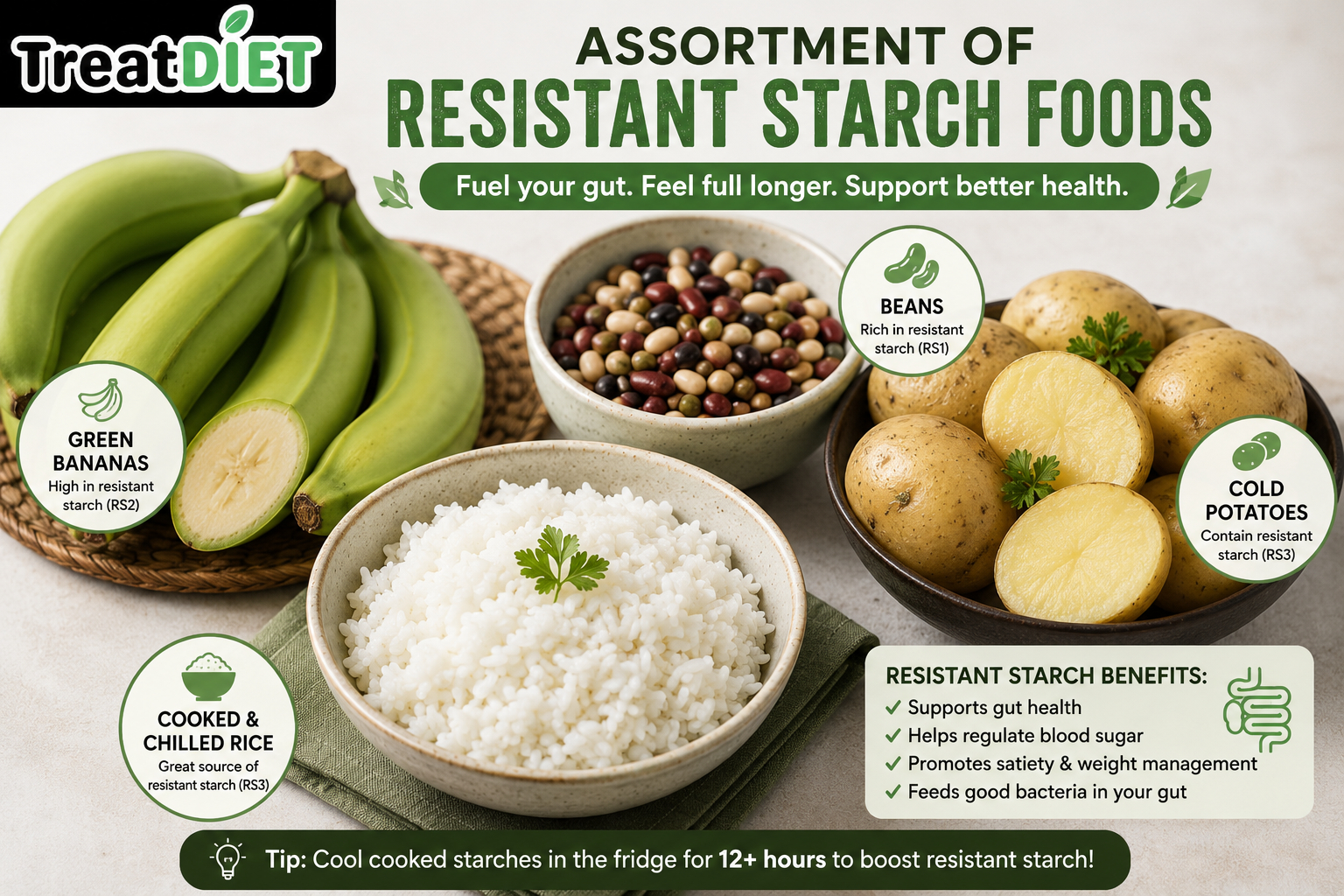
| Type 1 (RS1) | Physically inaccessible; locked inside dense fibrous cell walls that human enzymes cannot breach. | Whole grains, seeds, unground kernels, chickpeas, and lentils. |
| Type 2 (RS2) | Naturally tightly packed, un-gelatinized starch granules with a compact molecular layout. | Raw green bananas, raw potatoes, and high-amylose cornstarch. |
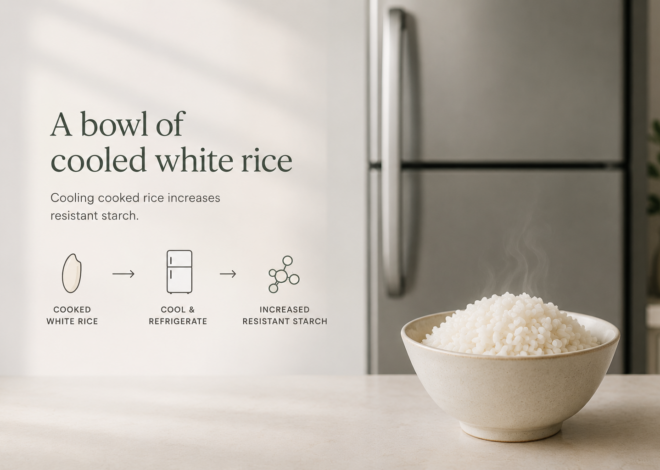
| Type 3 (RS3) | Retrograded Starch: Formed when starchy foods are cooked and subsequently cooled, establishing a permanent crystalline grid. | Cooked and cooled rice, chilled boiled potatoes, and retrograded pasta. |
| Type 4 (RS4) | Chemically altered via cross-linking or modification to purposefully repel metabolic enzymes. | Man-made synthetic fibers added to commercial “low-carb” wraps or processed health foods. |
2. The Metabolic Mechanism: Gut Ecosystems & Insulin Sensitivity
When you consume high-RS foods, the biological payoff occurs in your large intestine. Probiotic strains, particularly butyrate-producing microbes, ferment the starch molecules. This fermentation yields short-chain fatty acids (SCFAs), with butyrate as the core hero molecule.
Clinical documentation provided by the Harvard T.H. Chan School of Public Health demonstrates that butyrate serves as the primary respiratory fuel for colon cells, strengthening intestinal barrier integrity, down-regulating systemic inflammation, and naturally balancing insulin spikes.
Furthermore, because resistant starch passes through without entering the bloodstream as glucose, it preserves a low Glycemic Index (GI). This structural anomaly prompts the “second-meal effect”—a physiological state where your body maintains highly efficient insulin management and a blunted glucose reaction even during subsequent meals eaten hours later.
3. Practical Meal Prep Hub: Accessing Our Deep-Dive Blueprints
Unlocking the practical weight-management potential of Type 3 (Retrograded) resistant starch requires adjusting standard cooking protocols. We have constructed dedicated culinary guides to help you manage specific ingredients:
📖 Explore Our Kitchen Biohacking Library
To put this food science into immediate action within your own home kitchen, study our specific tactical blueprints:
- 👉 Does Chilling Cooked Rice Reduce Calories? The Foundation Guide — Learn how simple refrigeration triggers molecular retrogradation.
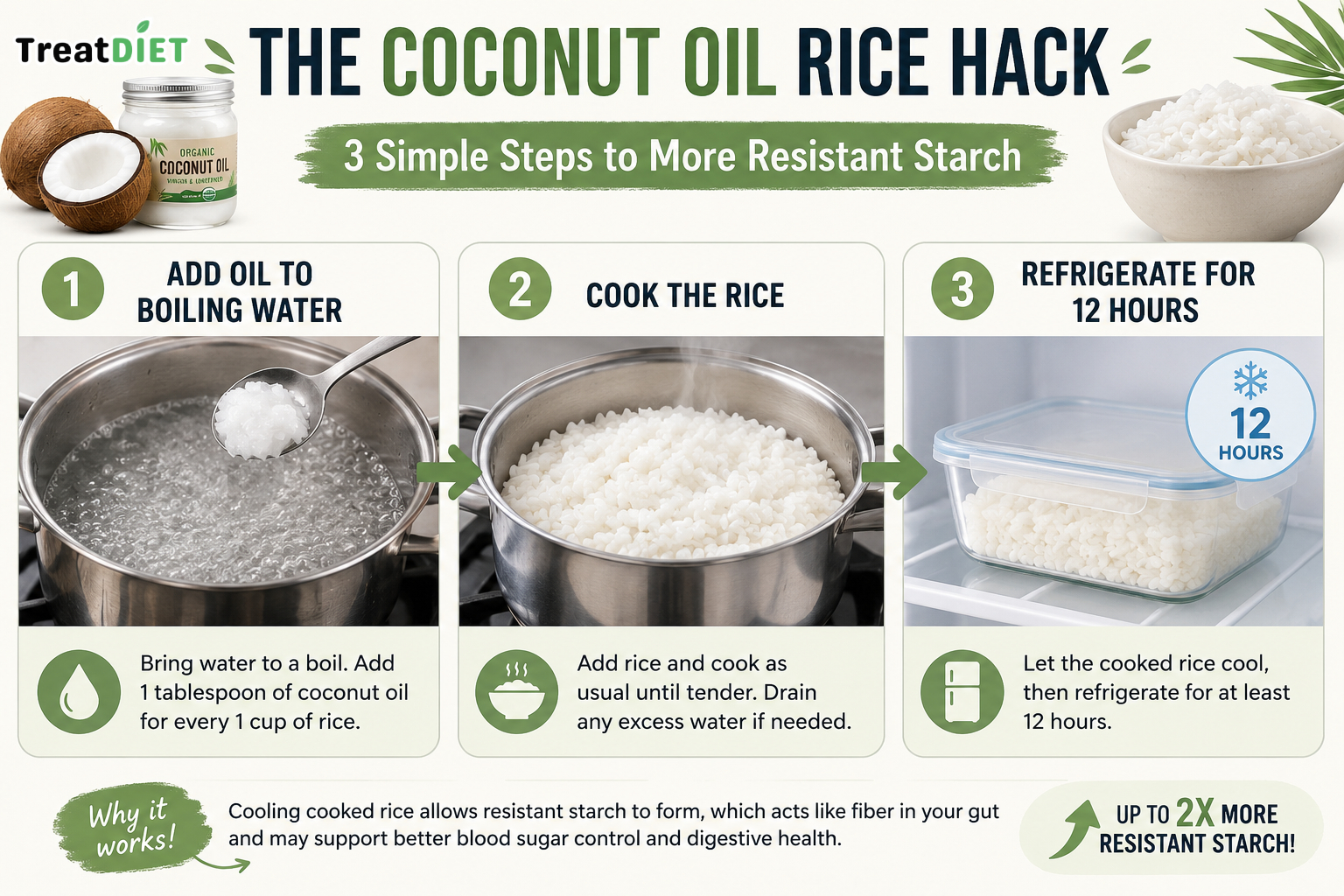
- 👉 The Coconut Oil Rice Hack: Supercharging Starch Retrogradation — Discover how adding specific cooking lipids before cooling can up to double your resistant starch production.
4. Frequently Asked Questions (FAQs)
❓ Does freezing starch speed up the generation of resistant starch?
Answer: Surprisingly, no. Dropping the temperature rapidly to sub-zero levels freezes water molecules instantly, preventing the gradual, systematic realignment of amylose chains into the dense crystalline web required for Type 3 resistant starch. Stick to standard refrigeration at 4°C for 12 to 24 hours.
❓ Can eating too much resistant starch cause digestive distress?
Answer: Yes, it can. Because resistant starch undergoes active fermentation by your microbiome, introducing vast amounts too quickly can cause temporary bloating, mild cramping, or gas. It is best to increase your intake gradually, allowing your microbiome to scale its population naturally.
5. High-Authority Peer-Reviewed References
At TreatDiet, our profiles are anchored in peer-reviewed clinical validation. Review the core literature powering this guide via the external links below:
- To read comprehensive meta-analyses regarding metabolic health impacts, review the dataset via the National Center for Biotechnology Information (NCBI).
- For empirical data tracking changes in glycemic index via lipid-starch manipulation, view details through the American Journal of Clinical Nutrition.
Medical Disclaimer:
All materials published across TreatDiet.com are curated for general nutrition research and educational purposes only. Structural food adjustments and culinary adjustments should not be utilized to replace professional therapy, medicinal plans, or direct dietary prescriptions provided by a qualified medical professional or endocrinologist.