The Coconut Oil Rice Hack: How Cooking Fats Can Double Your Rice’s Resistant Starch
The Food Science Summary:
A groundbreaking study revealed that adding a healthy lipid—specifically coconut oil—to boiling water before adding your rice, followed by a 12-hour cooling period, can up to double the amount of Resistant Starch (RS) compared to regular rice. This culinary biohack alters starch at a molecular level, substantially reducing digestible calories and easing the glycemic load on your metabolism.
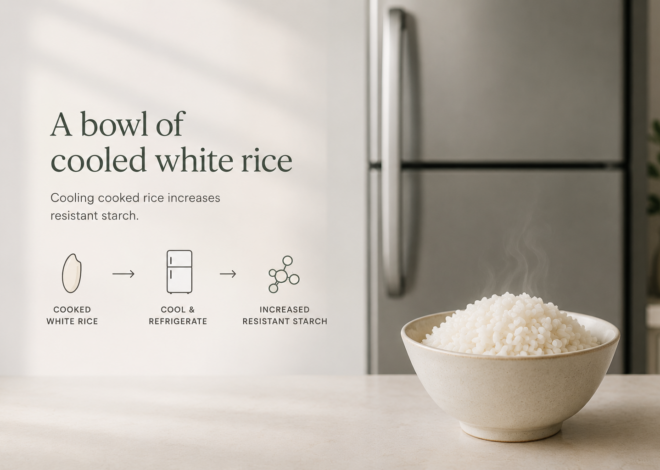
In our previous article, we established that chilling cooked rice creates resistant starch, effectively turning a simple carbohydrate into a gut-friendly prebiotic. But what if you could supercharge this process? What if a simple kitchen ingredient could double the fat-burning, sugar-balancing power of your leftovers?
Enter the “Coconut Oil Rice Hack.” First presented at the National Meeting of the American Chemical Society (ACS), this method took the health world by storm. It proved that manipulating macro-nutrients during the boiling phase rewrites how your body processes carbs. Let’s dive into how it works and how you can do it perfectly tonight.
The Molecular Magic: How Lipids Alter Starch
To understand this hack, we have to look inside the rice grain. Rice contains two types of starch: amylose (long, straight molecular chains) and amylopectin (highly branched chains). High-amylose rice is the prime candidate for creating resistant starch.
When you drop coconut oil into boiling water, the oil acts as a molecular shield. As the rice cooks and the starch granules swell (gelatinization), the lipids from the coconut oil slip inside the open spaces and bind with the amylose molecules. This structural bond forces the starch to form a tight, unyielding crystalline structure as it cools. The resulting matrix completely blocks your body’s digestive enzymes from breaking it down into simple sugars.
The Step-by-Step Blueprint for the Perfect Hack
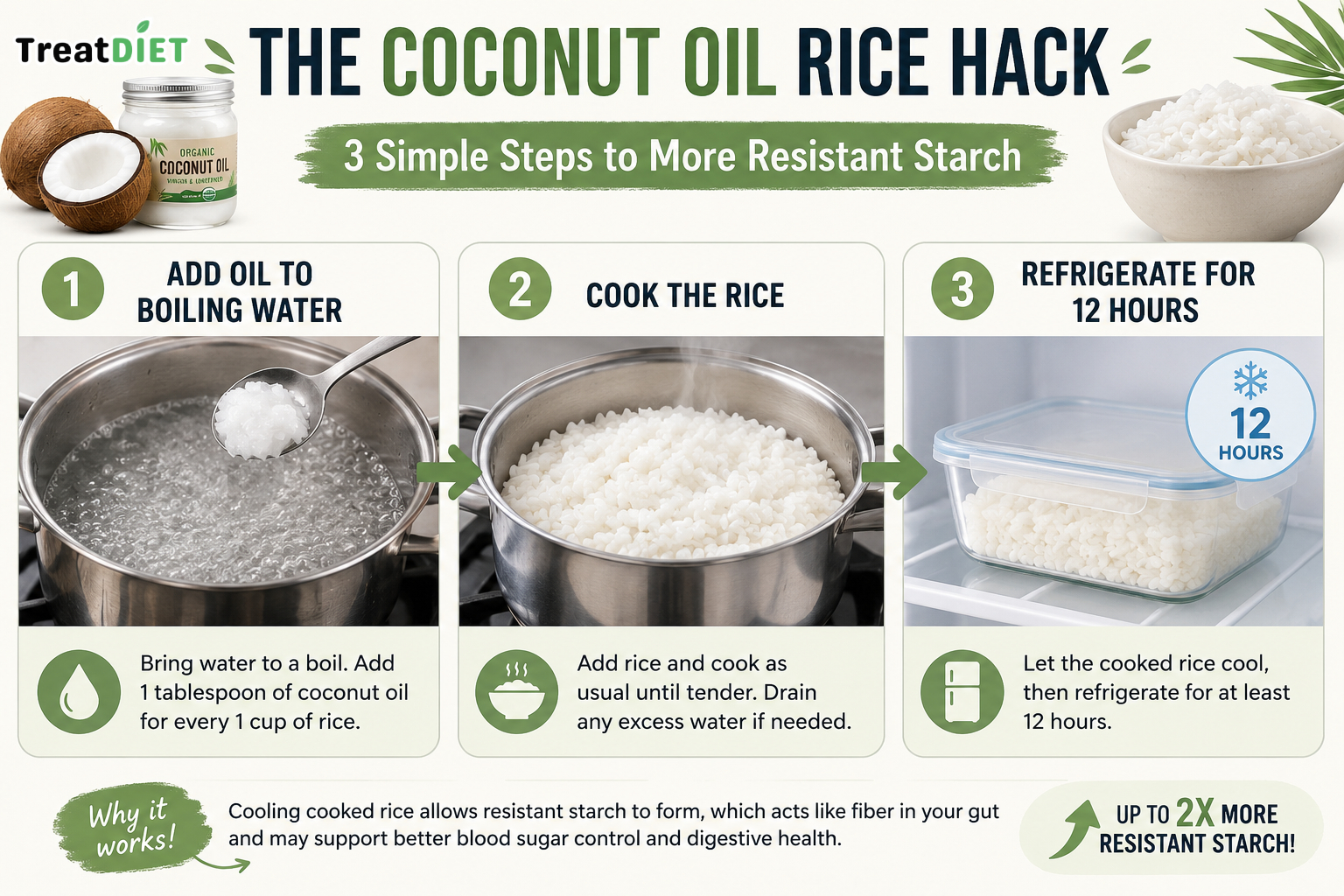
Executing this technique requires precise order and timing to ensure the lipid-starch bond occurs effectively:
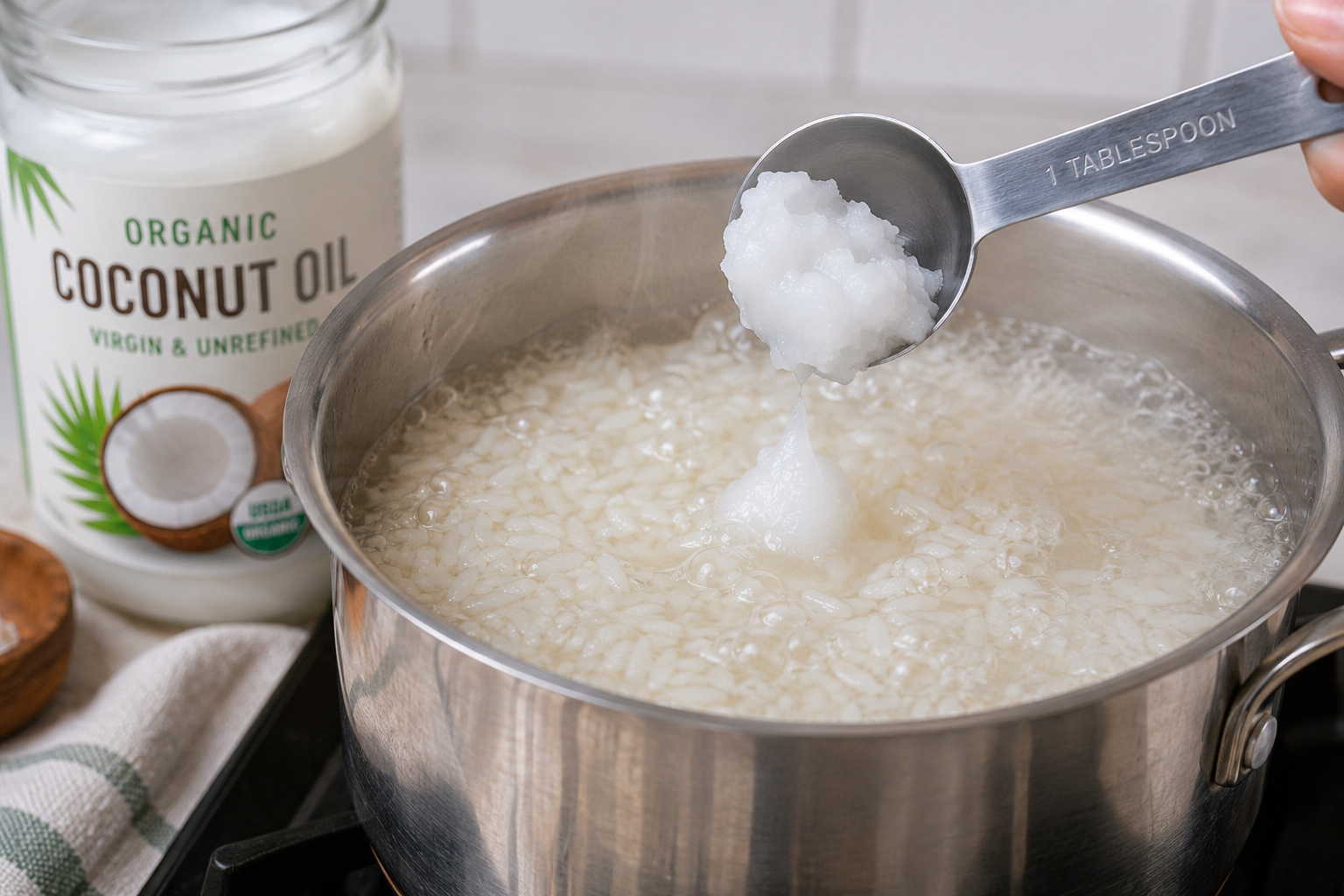
- Boil and Lubricate: Bring a pot of water to a rolling boil. Before adding the raw rice, add 1 teaspoon of organic virgin coconut oil for every half-cup of raw rice you intend to cook (roughly 3% of the weight of the rice).
- Simmer and Cook: Add the rice, turn down the heat, cover, and let it cook normally until completely tender. The oil will thoroughly coat the swelling starch chains.
- The 12-Hour Cold Reset: Let the cooked rice cool to room temperature. Pack it tightly into a sealed container and refrigerate at 4°C (40°F) for a minimum of 12 hours. This long cold rest locks the new resistant starch matrix into place.
Data Comparison: Starch Efficiency & Impact
How much of a difference does this extra step actually make? Let’s examine the nutritional data across various preparation styles:
| Preparation Style | Resistant Starch Level | Glycemic Impact | Digestible Calories |
|---|---|---|---|
| Freshly Cooked Plain Rice | Baseline (Lowest) | High (Rapid Spike) | 100% Base |
| Chilled Plain Rice (12 Hours) | Moderate Increase | Moderate | ~85-90% Remaining |
| Coconut Oil + Chilled Rice | Maximum (Up to 10-12x) | Low & Sustained | Lowest Possible |
Expand Your Food Science Knowledge
Complete your metabolic mastery with these related entries:
Frequently Asked Questions (FAQs)
❓ Won’t the calories from the coconut oil cancel out the calorie reduction?
Answer: This is a common concern, but the short answer is no. While coconut oil adds a minor caloric load upfront, the subsequent transformation of the rice’s structure into indigestible starch drops the net available calories far lower. The metabolic benefits (improved insulin sensitivity and prolonged satiety) vastly outweigh the small amount of fat added.
❓ Does the rice end up tasting heavily like coconut?
Answer: If you use *virgin* unrefined coconut oil, there will be a very subtle, pleasant coconut aroma. However, if you dislike the flavor profile entirely, you can use *refined* coconut oil (which has a completely neutral taste) or substitute it with grass-fed butter, and still achieve excellent structural modification.
Medical Disclaimer:
All material provided on TreatDiet.com is for instructional, research, and educational purposes only. Culinary biohacks designed to modify macronutrients or glycemic impact should be approached mindfully. Always seek direct counsel from your general physician or a registered dietitian prior to establishing new dietary protocols, particularly if managing underlying metabolic conditions or diabetes.